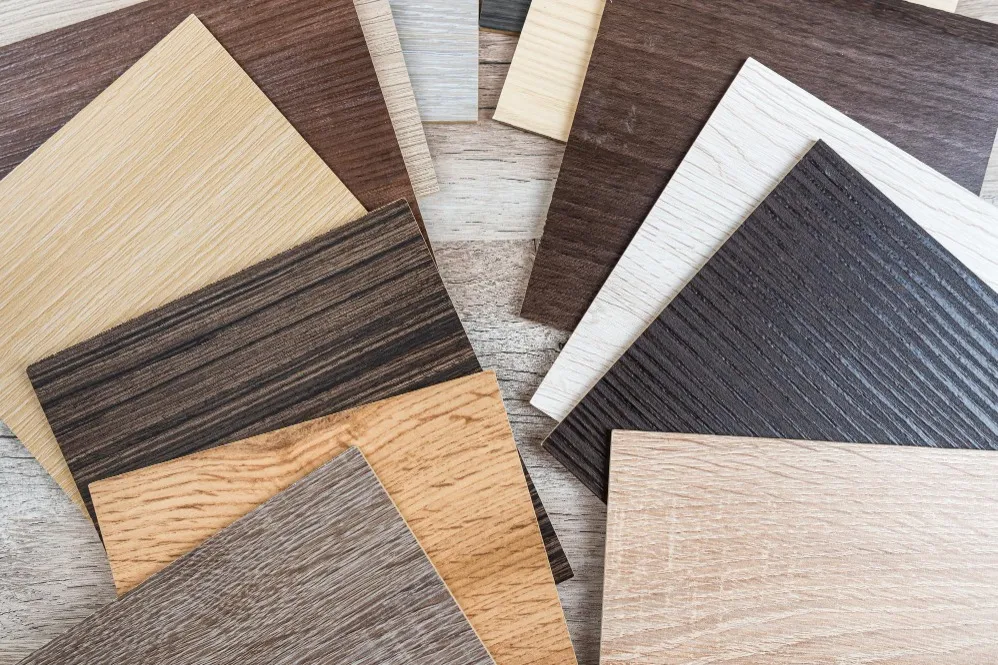
A finished wardrobe, cabinet, wall panel, or table may look simple from the outside, but its performance depends heavily on the materials beneath the visible surface. Understanding Veneer and Plywood Manufacturing helps architects, contractors, furniture manufacturers, and homeowners make better material decisions instead of evaluating panels only by appearance.
Veneer and plywood serve different functions, although they are frequently used together in interior applications.
Veneer and Plywood Are Not the Same Material
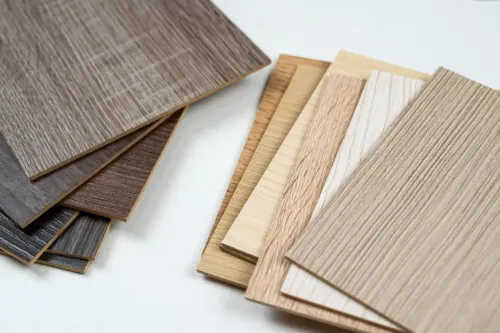
Wood veneer is a thin layer of real wood used primarily to create a natural decorative surface.
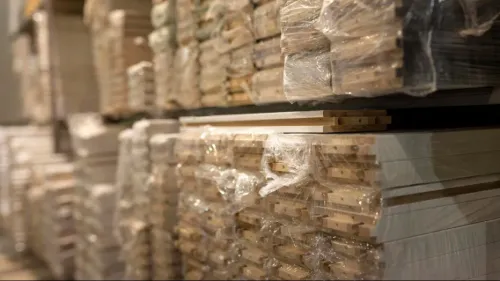
Plywood is an engineered panel produced by bonding layers of wood veneer in a structured arrangement. It is commonly used as a structural or supporting board for furniture, cabinetry, partitions, and other interior applications.
A project may therefore use plywood for the core construction and decorative veneer for the visible surface.
Understanding this distinction makes specifications much clearer.
Why Plywood Construction Matters
Plywood performance depends on several variables rather than thickness alone.
These can include:
- Quality of the wood layers
- Layer arrangement
- Bonding quality
- Panel consistency
- Surface condition
- Thickness tolerance
- Intended grade and application
A sheet that looks acceptable from the outside may behave differently during cutting, drilling, edge finishing, assembly, or long-term use.
For furniture manufacturers, consistency is particularly valuable because panel variations can affect fabrication efficiency.
How Veneer Selection Influences the Finished Surface
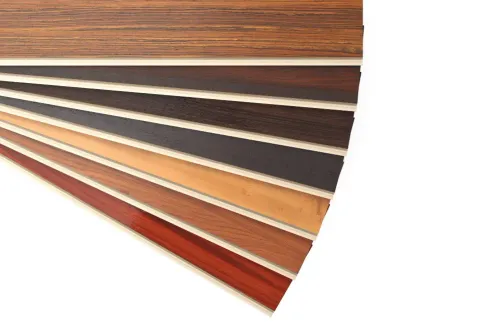
Decorative veneer adds the visual identity of wood to the panel.
The species, cut, grain, shade, and matching approach influence how the completed surface appears. Two veneer selections of a similar colour can create very different results because their grain movement may be completely different.
For example, a restrained grain can suit minimalist office cabinetry, while a more expressive figure may work well on a feature wall or statement furniture piece.
The manufacturing and selection process therefore affects design as much as material performance.
Bonding and Surface Preparation Deserve Attention
A decorative surface needs a stable, properly prepared base.
Poor surface preparation can become visible after finishing. Similarly, inappropriate bonding or fabrication methods may affect the final result even when good-quality veneer and panel materials have been selected.
That is why architects and designers benefit from discussing material specifications with fabricators early in the project.
The material, adhesive system, fabrication process, and finish should work as a coordinated system.
Manufacturing Consistency Matters at Scale
Consistency becomes increasingly important as project size grows.
A homeowner commissioning one furniture piece may focus mainly on visual selection. A furniture manufacturer producing multiple units needs predictable dimensions and processing characteristics. A real estate developer may additionally require organised procurement across a much larger quantity.
For projects in Pune and other parts of Maharashtra, the correct specification should therefore reflect the scale and nature of the work.
The same buying approach does not suit every customer.
Material Knowledge Reduces Expensive Rework
Many interior problems originate before installation begins.
Selecting a panel without considering its application can lead to unnecessary changes later. Choosing decorative material without considering grain continuity may create visible inconsistencies. Ordering quantities without accounting for matching and wastage can interrupt fabrication.
Better material knowledge allows buyers to ask practical questions before committing:
- Where will the panel be installed?
- What thickness is required?
- What surface will be applied?
- Is moisture exposure a consideration?
- How will edges be treated?
- Does the design require grain matching?
- How much material is required from the same selection?
These questions are often more useful than choosing purely by price.
Connecting Manufacturing Knowledge With Procurement
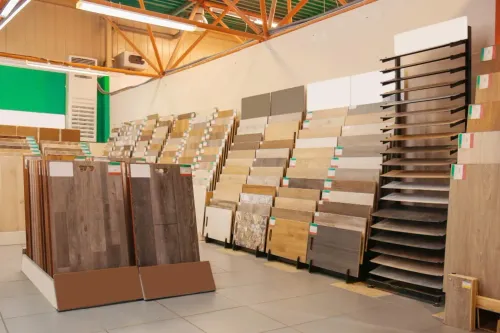
Pune has a diverse interior market covering residential furniture, commercial spaces, offices, hospitality projects, retail environments, and real estate developments. Material requirements can vary significantly across these applications.
National Veneer & Ply operates within this material ecosystem, where buyers may need to coordinate plywood, veneer, laminates, and other interior surface requirements.
Understanding how veneer and plywood are produced and used does not require a buyer to become a manufacturing specialist. It simply provides the knowledge needed to evaluate materials more intelligently.
When the visible surface, underlying board, fabrication process, and final application are considered together, procurement becomes less about buying individual sheets and more about selecting a material system suited to the project.
Keywords