Veneer and plywood suppliers play an important role in the quality and timing of an interior project. Their responsibilities extend beyond providing sheets. Material guidance, batch coordination, storage practices and delivery planning can all influence the finished work.
Choosing a supplier only through the lowest quotation may introduce unexpected costs through wastage, inconsistent material or delayed production.
Look for Application-Based Guidance
A reliable supplier should ask where the material will be used before recommending a product.
Kitchen cabinets, decorative wall panels, office furniture and structural storage units do not require identical specifications. The supplier should discuss moisture exposure, panel dimensions, load and finishing requirements.
Recommendations supported by practical reasoning are more useful than broad claims about quality.
Review Product Range Carefully
Access to multiple options is helpful only when the differences are explained clearly. Buyers should understand which plywood grade suits each application and how different veneers can be matched.
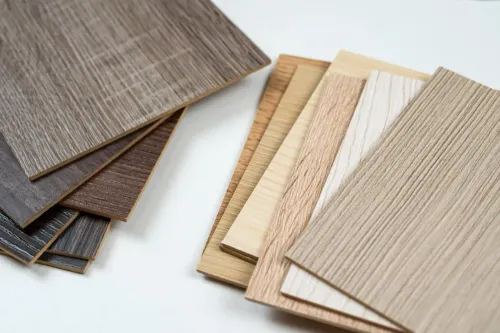
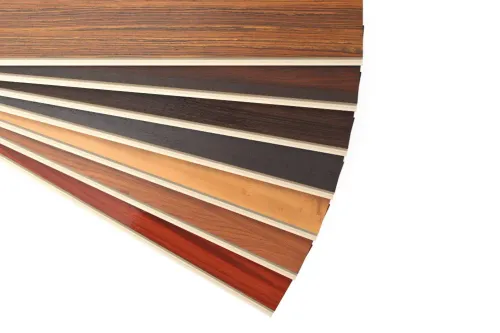
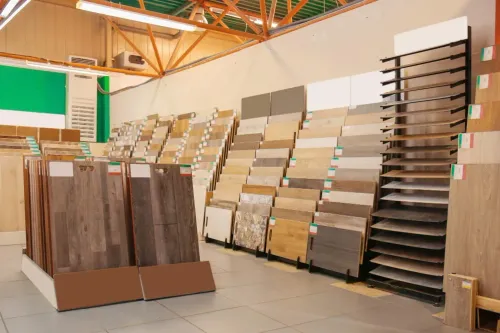
For decorative projects, the ability to compare veneer, plywood, laminates and edge treatments in one place can simplify coordination.
Inspect Material Condition
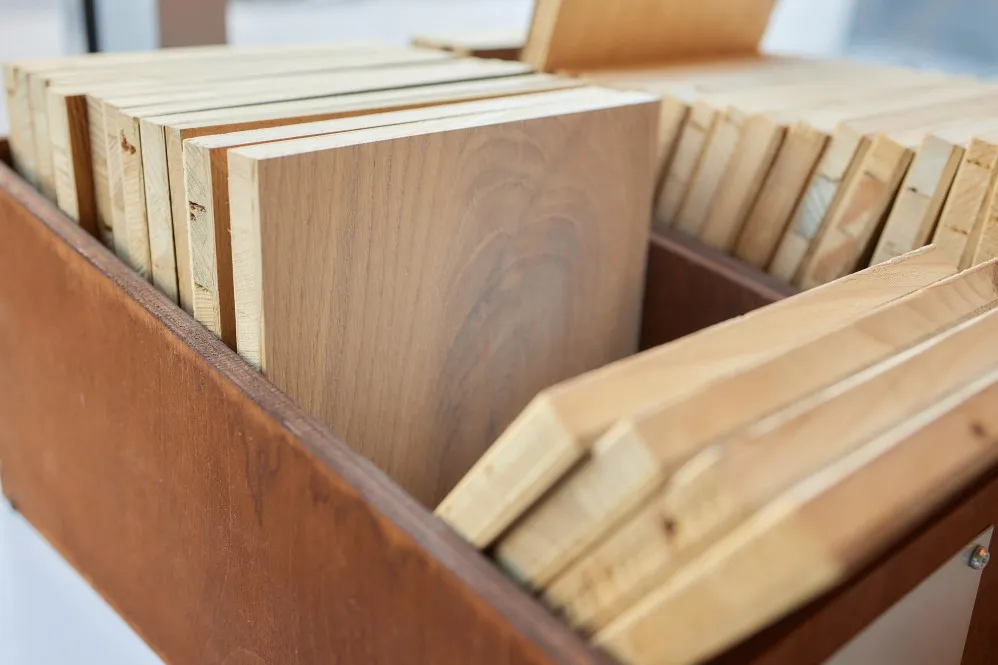
Plywood should be stored flat and protected from moisture. Veneer requires careful handling to avoid damage, dirt and uncontrolled exposure to sunlight.
Ask whether materials can be inspected before dispatch. For bulk orders, checking representative sheets may help identify concerns before production begins.
Document the Specification
The order should clearly mention:
- Product description
- Grade
- Thickness
- Sheet dimensions
- Quantity
- Approved veneer selection
- Delivery location
- Delivery date
- Applicable charges
- Replacement procedure
Clear documentation reduces the risk of accidental substitutions at the workshop or construction site.
Assess Batch Coordination
Natural veneer requires special attention because colour and grain vary between sheets. The supplier should help identify coordinated material for adjoining panels.
Approved sheets can be numbered or photographed so that the fabricator understands their intended sequence.
Plywood buyers should also ask whether repeat orders will maintain the same specification, particularly for phased developments.
Consider Delivery Capability
Pune projects may involve congested urban areas, gated residential developments or workshops with restricted unloading space. Delivery planning should account for vehicle access, timing and weather protection.
During the monsoon, material must be protected in transit. The responsibility for unloading and inspection should be agreed upon beforehand.
Understand the Issue-Resolution Process
Damaged material should be reported before cutting or surface application. Ask the supplier how delivery damage or specification concerns will be reviewed.
A defined process creates clearer expectations for both parties. Photographs and delivery notes can support documentation where necessary.
Include the Fabricator
The designer may focus on colour and grain, while the fabricator needs to understand sheet size, substrate and matching sequence. Bringing both perspectives into the selection process prevents avoidable errors.
National Veneer and Ply works with architects, contractors, furniture manufacturers, developers and homeowners requiring veneer and plywood supplies in Pune. Early discussions about drawings, quantities and timelines can improve material planning.
Supplier reliability is measured through consistency, clarity and coordination. A capable provider helps the buyer understand the material and prepares the order in a way that supports efficient fabrication.
This reduces uncertainty and gives project teams greater control over appearance, performance and delivery schedules.
Keywords