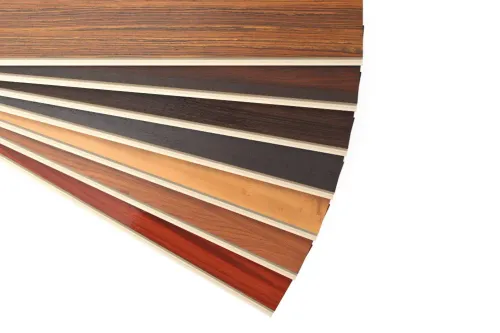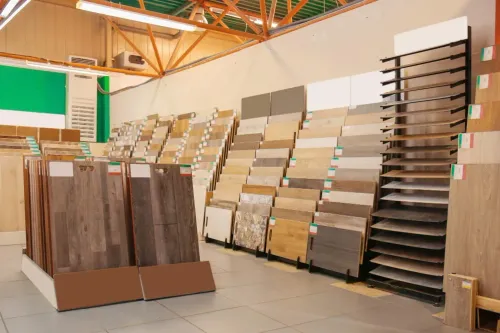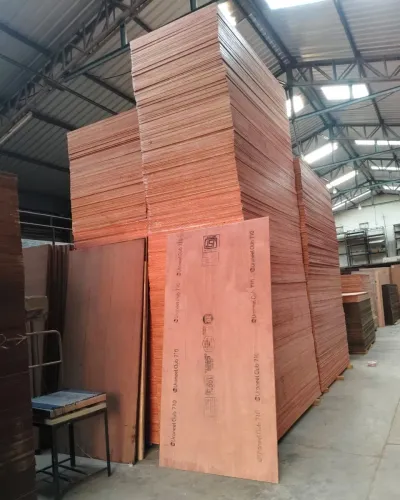
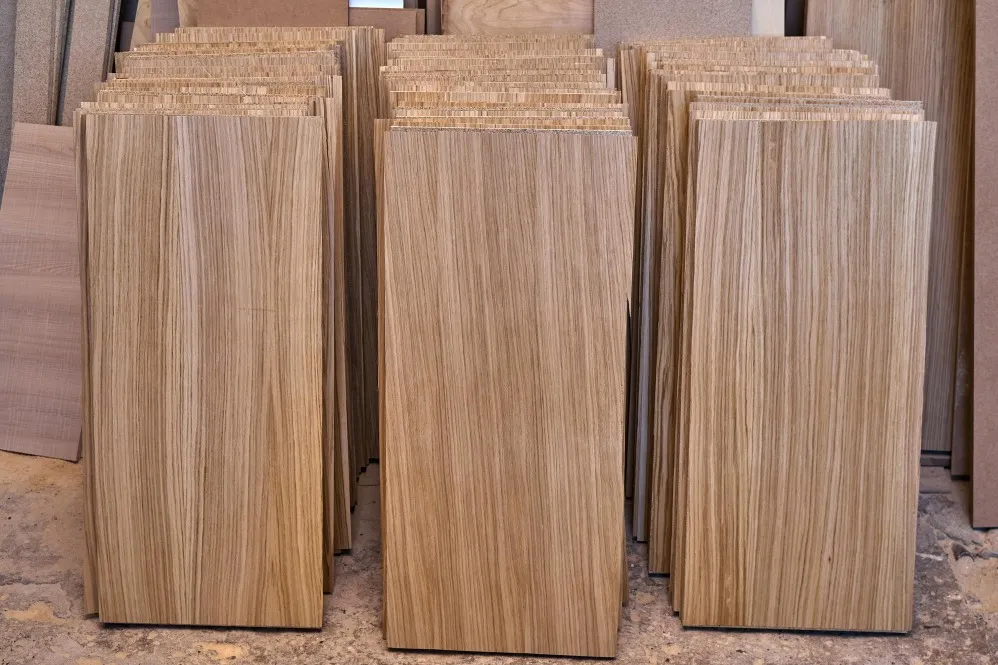
Premium-quality plywood should deliver consistent construction, predictable fabrication and suitability for its intended application. It cannot be identified reliably through surface appearance or price alone.
Buyers need to examine the internal core, bonding, thickness, flatness and compatibility with the proposed furniture design.
Inspect More Than the Face
A smooth outer surface may hide internal gaps or inconsistent layers. Examine the sheet edge to understand the core construction.
Look for:
- Excessive core gaps
- Overlapping veneers
- Loose layers
- Irregular thickness
- Damaged corners
- Visible separation
A compact core supports cleaner cutting and better hardware installation. It is particularly important for components that must hold screws or carry sustained loads.
Measure the Thickness
Plywood is sold according to nominal thickness, but actual measurements may vary. Precision furniture production requires reasonable consistency across each sheet and the complete order.
Measure several points using suitable equipment. Variations can affect groove dimensions, edge-band alignment and modular assembly.
Furniture manufacturers using CNC machinery should pay particular attention to thickness tolerance.
Check Flatness
Sheets should lie reasonably flat when properly supported. Bending or distortion can make cutting and pressing difficult.
Storage conditions may affect flatness, so buyers should also examine how the material has been stacked. Plywood kept upright or exposed to moisture may develop problems even when its original construction is suitable.
Match the Grade to the Application
Premium quality does not mean one plywood category should be used everywhere. Material selection must respond to the installation environment.
A bedroom wardrobe, modular kitchen, bathroom unit and loaded bookshelf have different requirements. Buyers should consider moisture, heat, weight, hardware and frequency of use.
The correct product is the one that performs appropriately in the intended setting.
Assess Surface Suitability
The face should support the chosen finish. Decorative veneer and certain laminates may require a sufficiently even substrate to avoid visible depressions.
Inspect the sheet in angled light. Raised fibres, repairs or low areas may affect the final decorative surface.
For painted furniture, surface preparation requirements should be discussed with the fabricator before ordering.
Consider Hardware Performance
Plywood used for hinged shutters, drawer systems and dismantled furniture must support hardware securely.
Good core construction helps, but correct fabrication remains essential. Screws should be suitable for the board thickness, positioned with adequate edge distance and installed without damaging the layers.
Wide shutters may need additional hinges, while loaded shelves require suitable support spacing.
Review Supply Consistency
A premium product should be reasonably predictable across repeat purchases. Confirm the grade, dimensions, batch details and expected lead time.
For phased projects, the selected specification should be documented clearly to reduce accidental substitution.
National Veneer and Ply helps contractors, furniture manufacturers and individual buyers evaluate premium-quality plywood for Pune projects. Practical discussions about load, moisture and finishing provide a stronger basis for selection than generic quality descriptions.
Quality plywood must also be stored, cut and installed correctly. Protected edges, balanced panels and suitable hardware all contribute to long-term performance.
When buyers evaluate the complete furniture system rather than a single sheet, they can make decisions that improve fabrication efficiency and the reliability of the finished interior.
Keywords