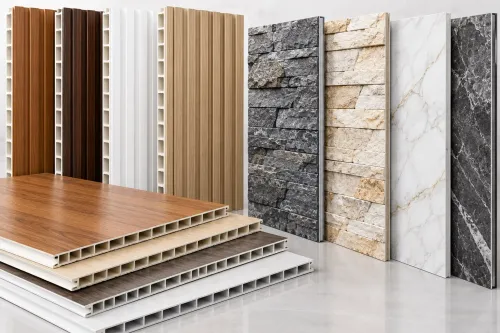
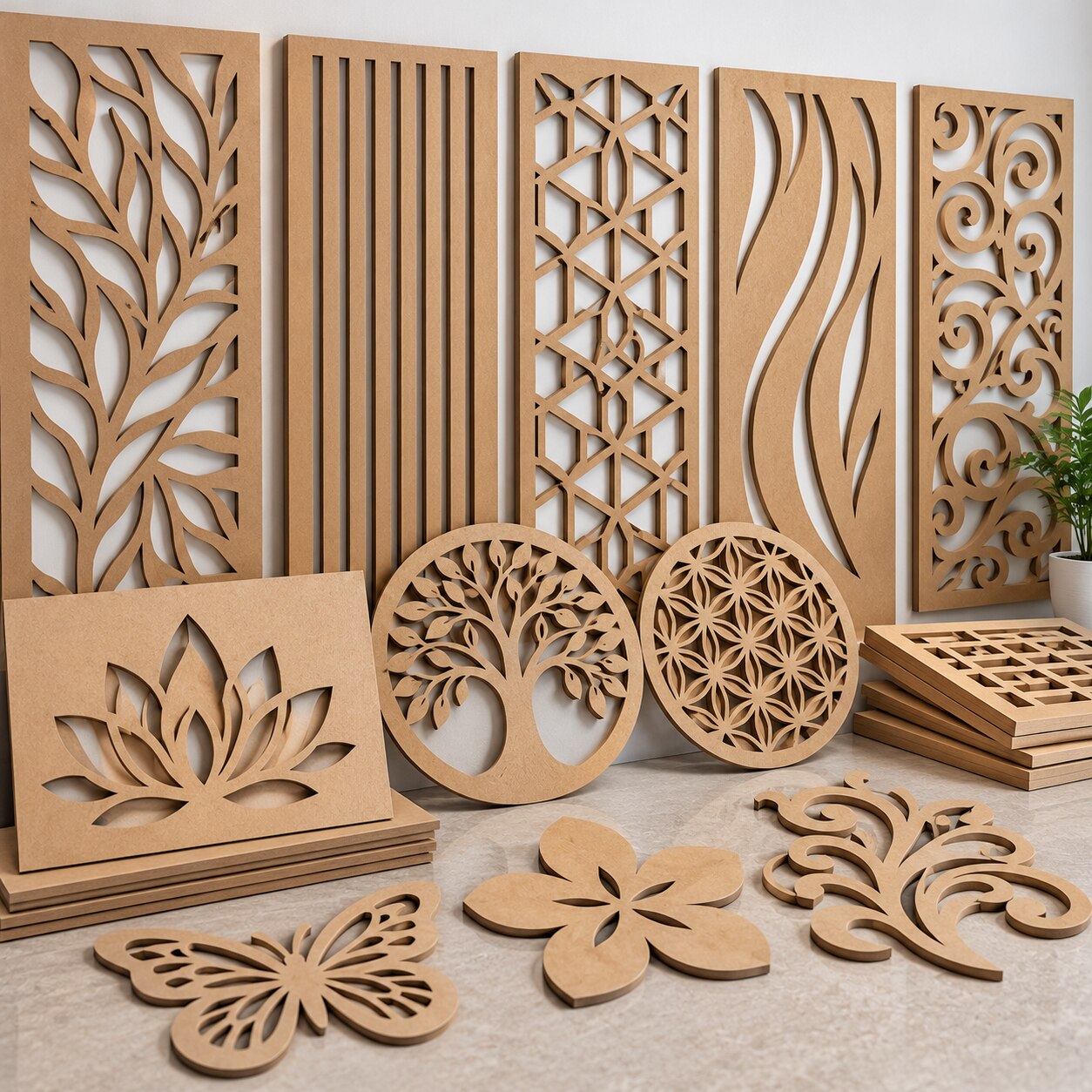
Two-dimensional MDF cutting is worthwhile when a project has repeated parts, detailed flat patterns or limited site labour, but it adds drawing, approval, transport and finishing decisions. By comparing the cutting method, specification, alternatives and total project effort, you can decide whether the service saves more than it costs.
Key takeaways
- Approve the CAD drawing, MDF grade, thickness and tolerance before cutting.
- Use 2D cutting when repeated parts reduce labour, waste and installation time.
- Reject the process when one-off parts cannot recover setup and programming costs.
- Put dimensions, edge quality, labelling, packaging and remake terms in the purchase order.
What two-dimensional MDF cutting actually produces
Two dimensional MDF cutting for builders in Pune normally means CNC routing or sawing a flat MDF sheet into plan-view parts, not carving a three-dimensional surface. The cutter creates profiles, grooves and slots through programmed paths while the sheet remains flat.
Typical outputs include:
- Internal cut-outs and geometric patterns
- Cabinet doors and screens
- Signage blanks and furniture components
- Service-access panels
You provide approved DXF, DWG or dimensioned PDF geometry with the sheet size, thickness, quantity and datum. The operator then nests repeated parts on one sheet to improve consistency and plan material use.
3D carving changes the surface depth, so it suits reliefs rather than flat-profile components. Laser cutting has different limits for MDF thickness, charring and edge appearance. Hand routing depends more on templates and operator consistency, while ready-made decorative panels offer faster selection but less control over size and pattern.
| Option | Main result | Practical limitation |
|---|---|---|
| CNC 2D routing | Repeated flat parts, slots and cut-outs | Needs approved digital geometry |
| 3D carving | Raised or recessed surface depth | Not a flat profile process |
| Laser cutting | Fine programmed profiles | MDF thickness, charring and edges differ |
| Hand routing | Template-based profiles | Operator consistency controls repeatability |
| Ready-made panels | Immediate decorative selection | Limited size and pattern control |
The first value test is simple: CNC 2D work earns its cost when the design is repeated or geometrically difficult. A few plain rectangles may be cheaper through a panel saw.
What drawings, MDF grades and tolerances must you approve
Before requesting a 2D MDF cutting service in Pune, submit one controlled cutting list, not a sketch. Include:
1. Approved drawing revision, part numbers, overall length and width, cut-out dimensions, sheet thickness, face direction, quantity, datum or orientation, minimum internal corner radius, hole sizes, edge profile and required edge treatment.
2. Separate machine tolerance from the tolerance needed after fitting. A round CNC tool leaves a radius inside corners, not a sharp square corner; tool diameter, cutter runout, sheet movement, vacuum hold-down, kerf compensation and board stability affect the installed result.
3. Identify the board manufacturer and grade, thickness, moisture-resistant requirement, density, confirmed sheet size and face quality. State whether edges need sanding, primer, sealer, PVC lipping or veneer lipping. Do not approve exact thicknesses, grades or available sheet sizes until the supplier confirms its actual stock range.
4. Require the quotation to state whether drilling, labelling, painting, assembly and replacement parts are included. Ask for E1 or low-emission documentation for the exact board and batch; E1 describes an emissions classification or test result, not zero emissions.
5. Confirm the cutting tolerance, minimum internal radius, edge quality, sheet-yield layout, packaging and transport-damage responsibility. A machine tolerance does not guarantee a part will fit after handling, finishing and installation.
6. Record every revision approval in writing. A changed hole, datum or face direction after cutting is a drawing revision, not automatically a CNC error.
Which measurable benefits justify the cutting charge
The measurable MDF cutting benefits in Pune justify the charge when repeated or complex panels reduce site work: approved files reproduce consistently, internal cut-outs stay clean, several components nest on one sheet, and a damaged part can be remade digitally without remeasuring the design.
| Benefit | Delivery effect | What to verify |
|---|---|---|
| Repeatable panels | Faster installation and matching replacements | Approved drawing revision and part labels |
| Internal cut-outs | Less site routing and marking | Tool diameter and corner radius |
| Sheet nesting | Fewer sheet changes and handling steps | Actual nesting layout or sheet-yield calculation |
| Digital reproduction | Quicker replacement after damage | Stored DXF, DWG or dimensioned PDF |
A generic “waste saving” percentage proves little. Spacing, cutter diameter, face direction, board defects and retained spare parts change the result, so request the nesting layout for your cutting list. MDF cutting for builders also requires dust extraction and controlled cleanup; routing and sanding produce fine wood dust.
| Outsourced cutting | Owning a CNC router |
|---|---|
| Cutting charge, programming and transport | Equipment, extraction, training, storage, programming and dust control |
| Faster start for occasional batches | Pays back only with steady workload and skilled operation |
| Supplier handles machine process | Builder carries maintenance and production risk |
Do not confuse attractive geometry with better performance. MDF edges need sealing or lipping; standard MDF is not waterproof, and patterns do not improve moisture resistance, screw-holding or fire performance. For kitchens, bathrooms, semi-open areas and unconditioned sites, specify moisture-resistant MDF only where suitable, then protect every cut edge.
Choose a board rated for the exposure, not decorative MDF by default.
When the Pune project economics work—and when they do not
Use a five-factor test: panel quantity, pattern complexity, board thickness, schedule and available labour. MDF cutting for builders earns its cost when many identical or geometrically difficult panels must be reproduced quickly, especially where the site lacks skilled routing labour, dust extraction and controlled cleanup.
1. Compare these three complete totals, not three headline rates:
| Option | Include in the total |
|---|---|
| Ready-made panels | Purchase price, delivery, trimming, fitting, pattern limitations and replacements |
| Panel saw or hand routing | Sheet yield, templates, marking, labour, dust control, edge finishing and site time |
| Outsourced CNC | Cutting, finishing, installation and every preparation or logistics charge |
2. Add design-file preparation, approval time, cutting queue, minimum order, nesting and sheet yield, packaging, transport, breakage risk, site fitting, edge finishing and drawing revisions. Request the approved cutting list, nesting layout and inclusions before comparing suppliers.
3. Treat the MDF cutting benefits in Pune as weaker when you have a few simple parts, a small batch, urgent revisions or supplier-to-site transport that dominates the budget. Conventional panel-saw work can win there, particularly for thin, plain rectangles.
4. Ask National Veneer & Ply for a cutting quotation, but compare its total against the same approved drawings and inclusions rather than a per-cut headline rate. Release the full batch only after approving a sample or first article; it exposes wrong orientation, corner radii, edge damage and finishing defects early.
5. Recalculate if board thickness changes or labour availability shifts. Those two changes can reverse the decision even when the pattern and quantity remain fixed.
Related product
 | 3D MDF Boards Revolutionize Design with National Veneer & Ply's 3D MDF Boards Unleash creativity and redefine interiors with our cutting-edge 3D MDF... View product → |
Where 2D MDF panels fit and what the purchase order must protect
Use 2D MDF panels in Pune for dry interiors: cabinet doors, wardrobe fronts, wall screens, partitions, ceiling features, signage, grooved or fluted wall panels, furniture parts and removable service-access panels. Leave movement gaps, support spans adequately, use enough fixings, seal every cut edge and keep replacement access clear.
MDF is a poor choice for repeated screw removal, high point loads, impact, exterior exposure or continuously wet service. Compare plywood when those conditions dominate.
| MDF | Plywood |
|---|---|
| Dry decorative work with controlled loading | Better for impact, heavier loads and repeated fastening |
| Needs sealed edges and supported spans | Usually stronger screw-holding and greater site tolerance |
| Avoid exterior and continuously wet service | Specify grade, reinforcement and edge protection for the exposure |
Before ordering, require:
- Manufacturer and grade, confirmed thickness, approved drawing revision and face orientation
- Tool diameter or minimum internal radius, dimensional tolerance and required edge quality
- Yield layout, part labels, packaging and transport-damage responsibility
- Replacement policy and fire documentation for the proposed assembly
A sample or first article can expose a radius, fit or edge problem before production. Ask a 2D MDF cutting service in Pune to state these fields in the quotation, especially for mdf decorative panels in Pune.
Choose 2D cutting when repeatability and labour savings outweigh preparation and logistics; choose simpler cutting or another board when they do not.
Frequently asked questions
What does two-dimensional MDF cutting produce?
It produces flat, plan-view MDF parts with profiles, grooves, slots and cut-outs made by CNC routing or sawing.
What must Pune builders approve before MDF cutting begins?
Approve the CAD drawing, MDF grade, sheet thickness, grain or face direction, dimensions, edge treatment and allowable tolerances.
When is 2D MDF cutting economically worthwhile?
It works when repeated parts reduce site labour, material waste and installation time enough to exceed programming, setup and cutting charges.
When is MDF cutting the wrong choice for a project?
Avoid it when the design has one-off parts, frequent revisions, loose measurements or too little repetition to recover setup and programming costs.
What should an MDF cutting purchase order specify?
Specify the approved drawing revision, material grade and thickness, dimensions, tolerances, edge quality, part labels, packaging, delivery sequence and remake responsibility.
Keywords