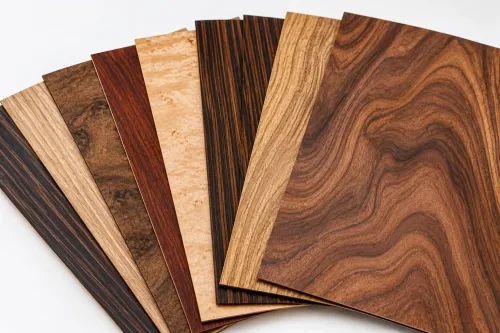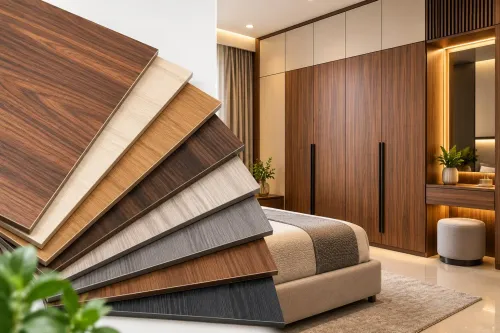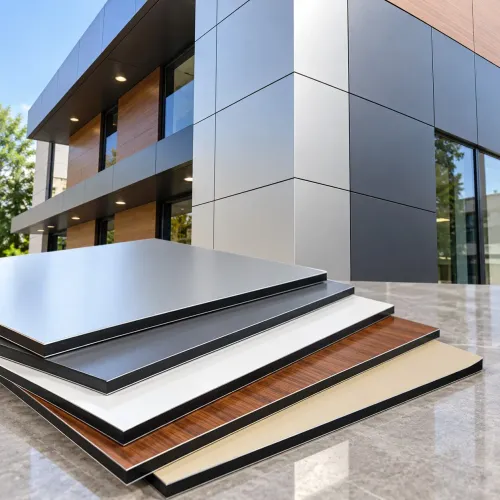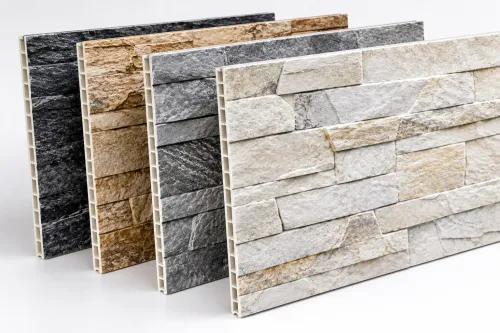
A louver that performs well on a dry interior wall can fail quickly on a Pune balcony, façade or service area once monsoon water, dust and heat reach its edges and fixings. By separating exposed from interior use, matching the blade geometry to the job and checking the complete panel assembly, you can choose a design that remains serviceable instead of judging only its appearance.
Key takeaways
- Use sealed, moisture-resistant assemblies for rain-exposed Pune facades.
- Select blade depth and spacing to balance airflow, privacy and cleaning access.
- Specify fire rating, impact resistance, edge sealing and fixing details together.
- Use functional industrial louvers where ventilation performance matters more than decoration.
Start with the setting: where will the louvers face Pune’s weather?
Rain exposure is the first decision. For the best louver design for projects in Pune, separate exposed exterior locations from protected interiors: monsoon rain, wind-driven water, dust, strong sun and repeated cleaning quickly reveal weak cores and unsealed edges.
| Location | Suitable louver design | Reason |
|---|---|---|
| Balconies | Fixed, deep aluminium or coated steel blades | Resists wind, rain and sun; angle blades to shed water while preserving airflow |
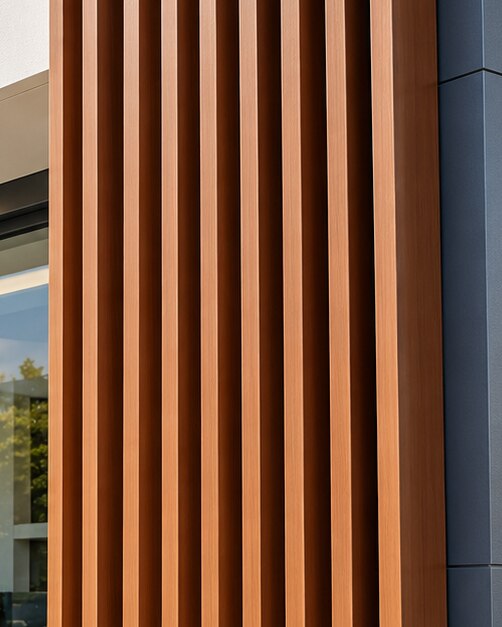
| Façades | Fixed vertical or horizontal aluminium louvers | Provides shade with low maintenance; specify pretreatment, coating, drainage and sealed cut edges |
| Kitchens | Removable, washable aluminium or coated metal panels | Handles grease, steam and frequent cleaning better than MDF or untreated veneer |
| Service areas | Modular metal baffles or louvers | Removable sections give access to plumbing, electrical and HVAC services |
| Offices | Interior wood-look, veneered or powder-coated aluminium louvers | Use fixed or adjustable blades for privacy, glare control and visual separation |
| Workshops and plant rooms | Galvanized or suitably coated steel systems | Takes greater impact than thin aluminium, but needs stronger supports and anchors |
For durable louver panels in Pune, seal or cap every cut edge, end grain, screw penetration and service opening. A finished face cannot protect an exposed MDF or plywood core. Keep untreated veneer, MDF and ordinary interior plywood away from rain, condensation and wet-cleaning zones.
In humid interiors, choose removable modules rather than a permanently bonded screen. Approve a sample bay showing the actual blades, joints, clips, backing and finish; inspect bowing, open joints, colour variation and replacement access before production.
Choose blade geometry for airflow, privacy and maintenance
For the best louver design for projects in Pune, split the choice between interior and exposed exterior use first. Monsoon rain, dust and strong sun make untreated veneer, MDF and ordinary interior plywood poor choices where louvers face weather, condensation or repeated wet cleaning.
Compare these louver panel options by control, access and cleaning load:
| Option | Strength | Limitation |
|---|---|---|
| Fixed slats | Few moving parts; reliable screening | Airflow and privacy cannot be adjusted |
| Adjustable blades | Changes airflow, glare and privacy | Hinges and pivots collect dust and can fail |
| Sliding panels | Gives service access without dismantling the screen | Needs a level track and clearance |
| Operable panels | Opens a larger area for ventilation or maintenance | Hardware adds cost and upkeep |
| Vertical slats | Good for tall façades and side-angle privacy | Edges can be harder to dust |
| Horizontal slats | Strong sun shading and familiar detailing | Holds more dust on upper surfaces |
| Linear wall slats | Clean visual rhythm for interiors | Does not equal a ventilating grille |
| Perforated screens | Consistent screening with controlled open area | Holes trap dust and restrict access |
Choose blade spacing from the required free area, daylight, privacy and cleaning access. Narrow spacing hides services but reduces airflow and increases dusting; wide spacing ventilates better but exposes the backing wall.
Use removable modular panels near electrical, HVAC and plumbing services. Seal every cut edge, end grain, screw penetration and service opening; a finished face cannot protect an unsealed core. For façades, orient blades to block driving rain and direct sun, then confirm the tested complete assembly rather than relying on a surface-film fire claim.
Match the material to moisture, impact, fire and cleaning demands
For durable louver panels in Pune, use aluminium or suitably coated steel outdoors, and reserve wood-based panels for dry, sheltered interiors. Rain, condensation, dust and repeated wet cleaning expose unsealed cores quickly.
| Material | Best fit | Main durability concern |
|---|---|---|
| Solid wood | Dry feature walls and premium interiors | Swelling, checking and finish failure under moisture |
| Veneered plywood | Sheltered offices, kitchens and screens | The plywood grade, adhesive class and veneer must suit exposure |
| MDF | Dry decorative rooms with light cleaning | Water damages the core; ordinary MDF is a poor exterior choice |
| Aluminium | Balconies, façades and humid areas | Thin sections dent more easily and need sound fixings |
| Steel | Workshops, warehouses and service zones | Higher impact resistance, but greater weight and corrosion risk |
| ACP | Lightweight façades and rainscreen-style screens | Specify a tested fire-rated core; polymer cores can burn |
| PVC | Wet utility areas and easy-clean interiors | Heat, ultraviolet exposure and impact can cause distortion or cracking |
Compare louver panel options against the cleaning method, not just the appearance. Smooth powder-coated metal and capped PVC tolerate wiping better than open-grain timber; fixed blades also avoid hinges and pivots that collect dust.
Edge treatment decides whether a wood-based panel survives. Seal or cap every cut edge, end grain, screw penetration and service opening; a factory-finished face cannot protect exposed MDF or plywood. For industrial interiors, choose a metal baffle or louver system, with stronger supports and anchors for steel.
Use removable modules around electrical, HVAC and plumbing services so one damaged section can be replaced without dismantling the entire screen.
Separate decorative screens from functional industrial louver systems
A factory workshop needs a louver system that withstands impact, dust and service access, not a decorative screen chosen only for appearance. For louvers for industrial interiors, powder-coated aluminium, galvanized steel or suitably coated steel outlast MDF, veneer and ordinary plywood near machinery, plant equipment and wet cleaning.
Steel resists harder knocks than thin aluminium, but its weight demands stronger frames, anchors and substrates.
| Application | Suitable louver panel options | Specify | Avoid |
|---|---|---|---|
| Factory office | Fixed linear wall slats or wood-look metal blades | Easy-clean coating, controlled spacing and concealed service access | Unsealed veneer beside pantry or wash areas |
| Warehouse | Deep fixed metal baffles or grille panels | Galvanized or coated steel, impact-resistant brackets and visible inspection points | Adjustable blades that collect dust and add fragile pivots |
| Workshop | Fixed steel slats or perforated metal screens | Removable modules, corrosion-resistant fasteners and capped edges | MDF or thin decorative panels near tools, sparks or wash-down zones |
| Plant room | Modular fixed baffles or grille panels | Hinged or removable sections for electrical, HVAC and plumbing access | A continuous bonded screen that requires demolition |
| Commercial workspace | Fixed aluminium, perforated or veneered panels | Consistent finish, acoustic backing where needed and replaceable modules | Exposed screws without matching caps |
Fixed systems have fewer failure points than adjustable blades, whose hinges and pivots trap dust. In humid interiors, choose removable modules: technicians can reach services and replace one damaged panel instead of dismantling the entire wall or ceiling. Exposed brackets simplify inspection; concealed clips improve appearance but can slow replacement.
Seal every cut edge, penetration and service opening.
Specify the complete assembly and assess the Pune supplier
Approve a representative mock-up or sample bay before mass production. It must show the actual slat size, substrate, finish, edge detail, clips, joints and backing; inspect colour variation, veneer matching, bowing, open joints, coating damage and access for replacement.
1. Check the substrate’s grade, thickness, flatness and moisture resistance. Reject exposed MDF or plywood core at cut edges, end grain, screw penetrations and service openings; require sealing, edge banding or caps at every one.
2. Specify the coating system, colour reference and finish-batch control. Confirm that the sample matches the approved sheen and colour, and ask how the supplier handles scratches, UV exposure, cleaning chemicals and touch-up work.
3. Inspect the frame for straightness, rigid corners, drainage and a replaceable fixing arrangement. A concealed clip improves appearance but can hinder inspection; exposed screws or brackets are easier to service when countersunk, capped and corrosion-resistant.
4. Make the fire claim apply to the complete assembly: substrate, veneer or coating, backing, cavity and mounting method. ASTM E84 tests surface burning; it does not prove compliance with every Indian project requirement. Request the tested assembly and the applicable authority requirement.
5. Put warranty duration, exclusions, installation responsibility and finish-batch limits in the purchase order. Require a replacement-slats policy, local repair capability, stock or fabrication lead time and a method for replacing one module without dismantling the screen.
A louver supplier in Pune should provide site measurements and documented fire or acoustic data, not only a material price. National Veneer & Ply can be assessed against the same checklist. For durable louver panels in Pune, service access and replacement time deserve as much scrutiny as the visible finish.
Related product
 | louvers louvers A louver serves as a ventilation solution designed to permit the passage of air while effectively preventing the ingress of undesirable elements such... |
Frequently asked questions
Where should Pune louvers face weather-resistant construction?
Use exposed exterior louvers for assemblies that address monsoon rain, wind-driven water, dust, strong sunlight and repeated cleaning. Protected interiors face different moisture and impact demands.
How do blade geometry and spacing affect louver performance?
Blade depth, angle and spacing control airflow, sightlines, solar screening and access for cleaning. Compare these features against the room’s ventilation and privacy requirements.
Which louver material suits moisture, impact, fire and cleaning demands?
Match the material and core to the location’s water exposure, impact risk, fire requirements and cleaning method. Protect cut edges and joints where moisture can enter.
What separates decorative screens from functional industrial louver systems?
Decorative screens prioritise appearance and screening, while functional industrial systems are specified for measurable airflow, ventilation, access and operational durability.
Keywords